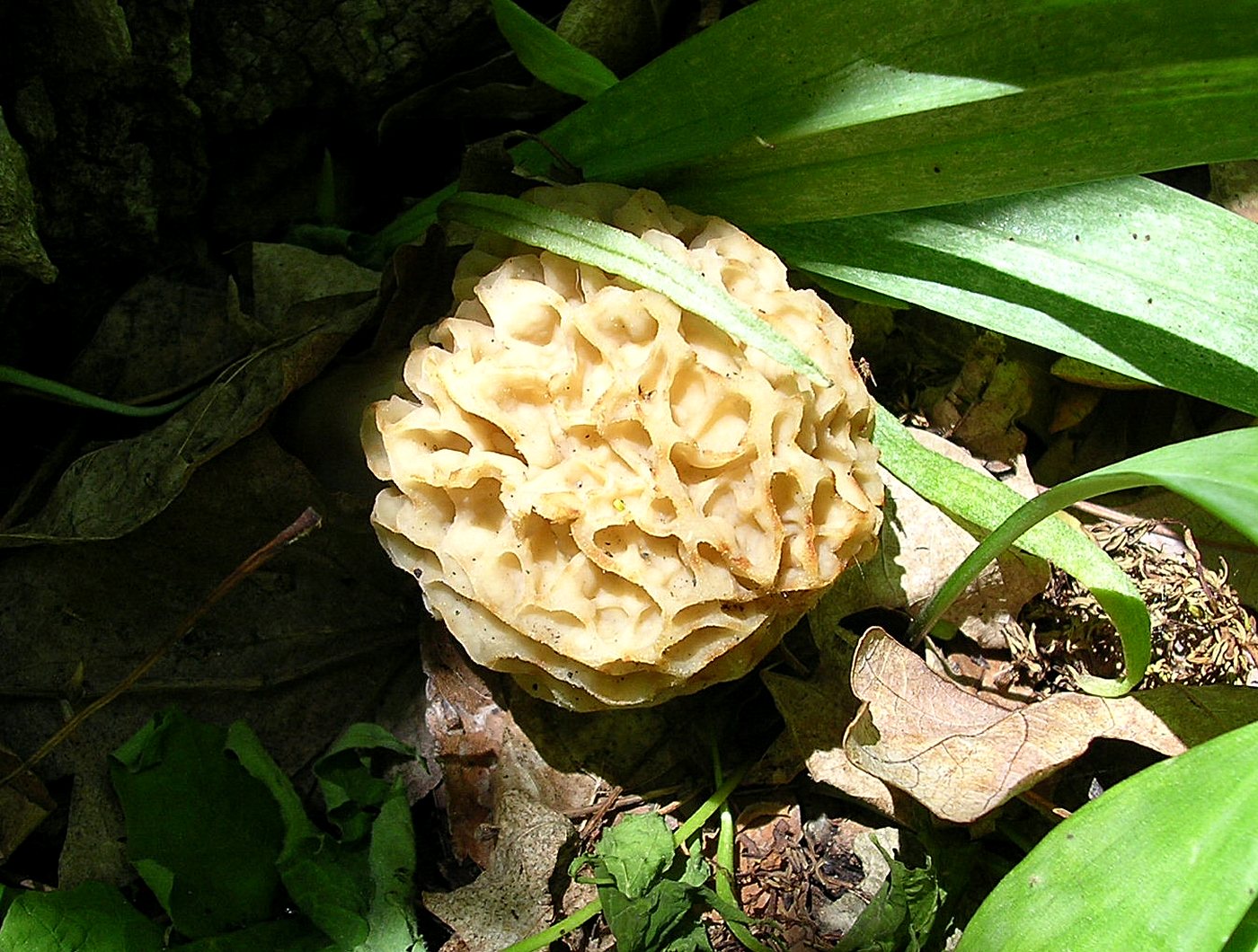
The first morels of the year don't announce themselves. One afternoon the forest floor is bare leaf litter, and the next morning a cluster of honeycomb caps is poking through the duff at the base of an old white oak. Miss the window by a week and you're left kicking dead elm bark while the squirrels get the last ones.
Around Truman Lake, that window opens in early April and slams shut by mid-May — sometimes sooner if a hot spell rolls in from the south. What follows is a practical breakdown of when to go, which Corps tracts to walk, and how to tell a true morel from the imposters that will make you regret a careless harvest.
When the Season Actually Opens
Missouri's morel season is driven by soil temperature, not the calendar. The reliable trigger is 50°F at a 4-inch depth — once the ground holds that temperature for a few consecutive days, the flush begins. Surface air temps matter less than people think. You can have a 70°F afternoon in late March and still find nothing, because the subsoil hasn't caught up.
Around Truman Lake, soil temps at 4 inches typically cross the 50°F mark between late March and the first week of April in warmer years, and as late as mid-April after a cold, wet winter. Peak production — the week when seasoned pickers clear their schedules — falls around late April, when white oaks are just leafing out and the mayapple canopy is knee-high but not yet fully open.
South-facing slopes warm first. If you want to be first to a spot, start on the sunny side of a creek bottom ridge and work your way around to north-facing aspects as the season matures. That approach can stretch your productive window by 10 days or more.
Check our Truman Lake hunting report in early April — we flag morel conditions alongside turkey season updates and note when local pickers start reporting finds.
Corps Tracts Worth Walking
The U.S. Army Corps of Engineers manages hundreds of thousands of acres around Truman Lake, and much of that land is open to public mushroom hunting. Missouri Department of Conservation rules apply: no commercial harvest, take only what you'll use, and stay off posted private ground.
Four areas consistently produce for people who know the timber:
Grand River Bottoms (north lake area) — Rich bottomland with a mix of cottonwood, sycamore, and mature white oak on the upper benches. The transition zone between flood-scoured bottoms and upland hardwoods is worth slow walking in late April.
Upper Tebo Arm — The Tebo Creek drainage near Osceola holds some of the best oak-hickory timber on the lake's south end. South-facing slopes above the creek coves warm early and hold moisture well into May. If you're staying at a cabin near Osceola, this is a reasonable day-trip on foot. See the Osceola area page for access points and local knowledge.
Cedar Creek and Brush Creek drainages — Both run through mature hardwood stands with significant white oak presence. Look for areas where old elms have died out — dying and recently dead elms are classic morel habitat throughout the Midwest, and Truman's timber has no shortage of them.
Before heading out, confirm public land boundaries using the Corps of Engineers lake map or the MDC's OnX-compatible public land layers. The boundary between Corps land and private ground is not always obvious on the ground.
Companion Plants That Tell You You're in the Right Spot
Experienced morel hunters don't just scan the ground — they read the plant community around them. Three plants in particular are worth learning:
- Mayapple (Podophyllum peltatum) — Broad umbrella leaves that emerge right alongside the main morel flush. A thick mayapple patch in a hardwood bottom is almost always worth slowing down.
- Trillium (Trillium spp.) — Three-petaled wildflower that favors the same moist, rich soils where morels fruit. If you see trillium, you're in good habitat.
- Dutchman's breeches (Dicentra cucullaria) — Delicate, ferny leaves with white pantaloon-shaped flowers. An early-blooming indicator that the soil temperature and moisture are in the right range.
None of these plants guarantee a morel. But finding them tells you the forest is doing something right, and that's worth a slower walk.
True Morel vs. False Morel — the Only ID You Need to Know
This is not a topic to skim. Eating a false morel (Gyromitra species) can cause serious illness.
The single most reliable test: cut the mushroom in half from cap to base. A true morel (Morchella spp.) is completely hollow — one open chamber running the full length of cap and stem. No shelves, no cotton stuffing, no partial walls.
A false morel, by contrast, has a chambered or wrinkled interior — not hollow all the way through. The cap on a false morel also tends to look brain-like or saddle-shaped rather than the distinct pitted honeycomb of a true morel.
Other true morel features:
- Cap and stem are attached at the base of the cap (not hanging free)
- The entire surface of the cap is pitted, not just wrinkled
- Colors range from pale blonde to gray-brown to nearly black (black morels tend to come first in spring)
If you're new to morel hunting, bring a field guide or use the MDC's mushroom identification resources before eating anything. The slice test is your friend — do it every time.
A Note on Burn Morels
In parts of the West, burned forest areas produce enormous morel flushes one to two years after a fire. It happens in Missouri too, but true wildfire burns are infrequent in our part of the state. Controlled burns on MDC and Corps land can produce a small-scale version of this effect — if you hear of a managed burn on a tract you hunt, it's worth revisiting the following spring. Don't expect bonanza quantities, but the timber edges near burn lines occasionally kick out morels in spots you'd otherwise overlook.
Cleaning and Cooking
Morels hold grit, insects, and the occasional slug deep in their pits and hollow interiors. The cleaning approach depends on how soon you're cooking.
If cooking the same day: Soak in lightly salted cold water for 20-30 minutes. The salt encourages any insects to exit. Rinse, shake dry, and cut in half lengthwise before cooking.
If storing for a day or two: Don't soak yet. Keep them in a paper bag or breathable container in the refrigerator and soak right before cooking. Wet morels stored in plastic turn fast.
For cooking, the simplest preparation holds up best: roll halved morels in flour or seasoned cornmeal, then fry in butter over medium heat until golden. Four to five minutes per side. That's it. The honeycomb structure crisps at the edges while the interior stays tender.
Morels also hold well when dried. A food dehydrator at 95-115°F for 6-8 hours produces shelf-stable dried morels that reconstitute well in cream sauces and soups. If you find yourself with more than you can eat fresh — which happens on a good day in the Tebo bottoms — drying is worth the effort.
Pick Responsibly, Leave Some Behind
Morels reproduce by releasing spores from the surface of their caps. A mushroom that's been cut or picked before it sporulates hasn't completed its cycle. The old wisdom about mesh bags letting spores fall as you walk is real, even if the effect per trip is modest — more importantly, leaving the oldest, most open-capped specimens in place gives them a chance to finish the job.
Take what you'll actually eat or preserve. On a productive morning in good timber, it's easy to fill a basket faster than seems possible. A haul that feels like abundance on the trail can feel like a chore to clean and cook by late afternoon. Pick with intention.
Missouri does not currently require a permit for personal-use mushroom hunting on Corps land, but regulations can change. Check with MDC each season before you go, particularly if you're hunting on land you haven't visited before.
Finding a Base for Morel Season
The Tebo Arm and the Osceola-area Corps tracts put you within walking or short-drive distance of some of the best timber on the south end of the lake. Staying at a cabin nearby means you can be in the woods at first light — which is when the low-angle morning sun catches the morel caps against the leaf litter and makes finding them considerably easier.
Browse cabin rentals near Truman Lake and look for properties on or near the Tebo and Sac arms if morel season is a priority. You'll also find current conditions, first-find reports, and any MDC updates on the Truman Lake hunting report as the season develops.
The window is short. When the ground says it's time, it's time.