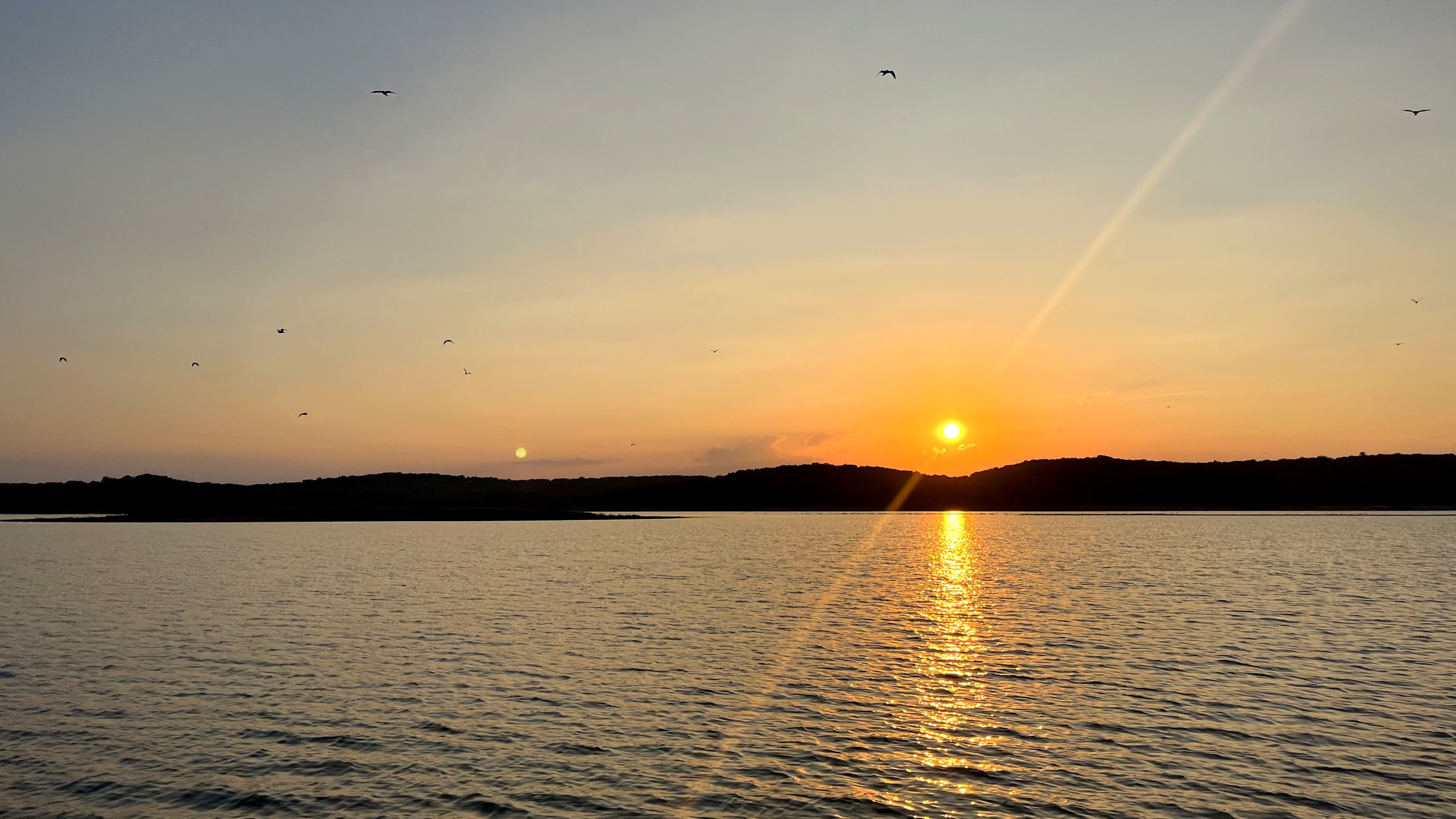
There's a specific kind of morning on Truman Lake in late October — calm enough to see the shad skipping across the surface, just enough light to spot the birds diving, and then suddenly the water erupts. White bass are below those boils, and they'll eat almost anything you throw. When the fall run is on, this is some of the fastest action the lake produces all year.
The truman lake white bass fall pattern typically runs September through November, driven entirely by baitfish movement. Understanding that connection is the whole game.
Why the Fall Run Happens
White bass are a schooling, open-water fish that spend most of the summer suspended in the main lake basin, following shad. As water temps drop through September and into October — usually cooling from the mid-70s down through the 60s and eventually into the 50s — shad migrate toward the shallower creek arms and coves to feed on dying vegetation.
The white bass follow them. Every time shad get pushed against a point, a creek mouth, or a shallow flat, the white bass herd them from below while birds hammer them from above. That's your surface boil.
Late October is typically peak. The shad are schooled tight, the bass are aggressive, and the window before the first hard freeze offers some of the most consistent topwater action of the year.
Reading the Water — Birds, Boils, and Skipping Baitfish
Finding actively feeding white bass on Truman's 55,600 acres sounds daunting, but they announce themselves.
Here's what to watch for:
- Diving birds — gulls and terns working a specific spot almost always mean baitfish are being pushed to the surface. Run toward them, not through them.
- Baitfish skipping — shad breaking the surface in scattered bursts, without obvious cause, often means bass are pushing them from below before the full boil starts.
- Surface swirls and fins — at lower light levels, schools sometimes roll rather than full-on boil. Look for flashes and nervous water near points.
- Color changes — a muddy edge along a clean flat often marks where bait has been concentrated.
Dawn and dusk are your windows. By mid-morning on bright days, the schools often go deep. When that happens, you shift tactics rather than leave the spot.
Where to Look on Truman Lake
White bass use the whole lake during fall, but certain areas concentrate fish more consistently.
Main lake points near the dam and along the Osage Arm are classic fall spots. The bass use these as ambush positions — shad move along the contour and get pinched against the point. A flat or gently tapering point is better than a sharp one during early fall; as temps drop, sharper structure with quick access to deep water becomes more productive.
Creek mouths are arguably the most reliable location from mid-October onward. The Tebo Arm, which feeds into the lake near Osceola on the southern end, has several smaller tributary mouths that funnel shad and concentrate bass right at the transition from creek to main lake. The Tebo Arm area near Bees Nest Cabins is worth exploring if you're staying in the south end.
Sterett Creek on the north side of the lake is another well-known fall white bass area. The creek arm offers multiple points and coves where shad stack up as temperatures fall.
Main lake flats adjacent to channel swings — especially between the Grand River Arm and the Osage — can hold big schools when bait is pushed offshore by wind. Check your depth finder for suspended bait clouds in 15-25 feet before you idle past.
See the Truman Lake fishing report for current conditions and which arms are producing before you launch.
Gear That Works
White bass are not gear-intensive fish, but the right setup makes a real difference when you're trying to cast quickly into a boil that may only last 90 seconds.
Rod and reel: A light to medium-light spinning rod in the 6'6" to 7' range with a fast tip gives you the casting distance you need to reach a school without running the boat into it. Pair it with a 2500-series reel. Eight- to ten-pound monofilament is the standard here — stretchy enough to absorb the strike on a hard-thrown slab, light enough for the smaller jerkbaits.
Terminal tackle:
- 3/4 oz to 1 oz chrome or white slabs — these are the workhorses. Cast them to the far edge of the boil, let them sink two or three feet, and rip them back up. The flash triggers an immediate reaction.
- Small jerkbaits (3" to 4", shad-colored) — when fish are at the surface and picking off individual baitfish rather than herding schools, a twitch-pause retrieve on a suspending jerkbait can be deadly.
- In-line spinners in white or silver work especially well for wading anglers fishing creek mouths on foot.
For deep fish: When the school goes down after the boil, mark the spot on your GPS and switch to vertical jigging. Drop a 3/4 oz slab straight down to the depth where you see marks on the graph, then snap it up 12-18 inches and let it flutter back. White bass hit on the fall more often than the lift.
The Hybrid Striped Bass Factor
One of Truman Lake's underrated attributes is its hybrid striped bass population. Hybrids are stocked by MDC and use the same main-lake structure as white bass — which means when you're fishing a fall boil, you have a legitimate shot at a fish that can push 10 pounds or more.
Hybrids are stronger swimmers and will often be found just below or on the edges of white bass schools, picking off the shad that escape the main melee. They hit slabs and jerkbaits the same way, but the fight is in a different category. If your light spinning rod bends in half and the fish runs for the main channel, you may have just hooked a hybrid.
MDC publishes stocking data and lake-specific prospect reports at mdc.mo.gov — worth checking before your trip so you know what's been put in recently.
What Happens After the First Hard Freeze
Once overnight temperatures drop into the upper 20s and the shallower coves start to see surface ice in the mornings, the pattern changes. The shad schools that were spread across multiple flats and points tighten into fewer, larger balls — often suspended in 20-30 feet of water over main lake structure.
The white bass follow. Boils become rare or stop entirely. But the fish are still there and still feeding — they're just harder to locate without a quality depth finder.
Post-freeze tactics:
- Run the main channel and troll with a jig or blade bait until you find a bait cloud on the graph.
- Anchor up-current of the school and vertical jig.
- Pay attention to water clarity — shad often push toward slightly stained water where they have a visibility advantage over other predators.
Late November fish on Truman can be some of the fattest of the season. They're loading up before winter and the feeding windows, though shorter, are intense.
Launching and Access
Truman Lake has multiple Army Corps of Engineers boat ramps that stay accessible into late fall. Warsaw on the east end has the most ramp infrastructure and is closest to the dam. Osceola on the south end puts you near the Tebo Arm and Sac River confluence — good positioning if you want to fish the southern creek mouths without a long idle.
Check the U.S. Army Corps of Engineers Truman Lake page for current ramp closures, which occasionally happen after heavy rain moves the lake level.
For a full rundown of what to do between fishing sessions — or for your non-fishing crew — the things to do fishing page has more on guides, access points, and seasonal tips.
Plan Your Fall Trip
If you're coming from Kansas City (about two hours) or Springfield (about 90 minutes), a two- or three-night stay puts you on the water for multiple dawn sessions — which is exactly when the fall white bass run is at its best. Staying near the lake means you're on the water in 15 minutes instead of sitting in a launch ramp line after a two-hour drive.
Browse owner-direct cabin options at /cabins — no booking fees, contact owners directly. If you're planning around peak fall timing, late October weekends book early, especially when word gets out that the white bass are boiling.
Before you go, check the Truman Lake fishing report for the latest on water temps, clarity, and which arms are holding the most fish. The difference between finding boils in 30 minutes and running the lake all day often comes down to checking conditions the night before.